
A Question of Confidence
What does confidence really mean? In this piece I explore the relationship between confidence, uncertainty and action through the prism of my experiences in the mountains. The decisions we make in everyday life rarely carry the same risks as those we may face in the mountains, yet we often demand far greater certainty before we act. I consider the role coaching can play in helping us understand what is holding us back, reconnect with our own capabilities and break down the steps needed move forward with clarity and confidence.
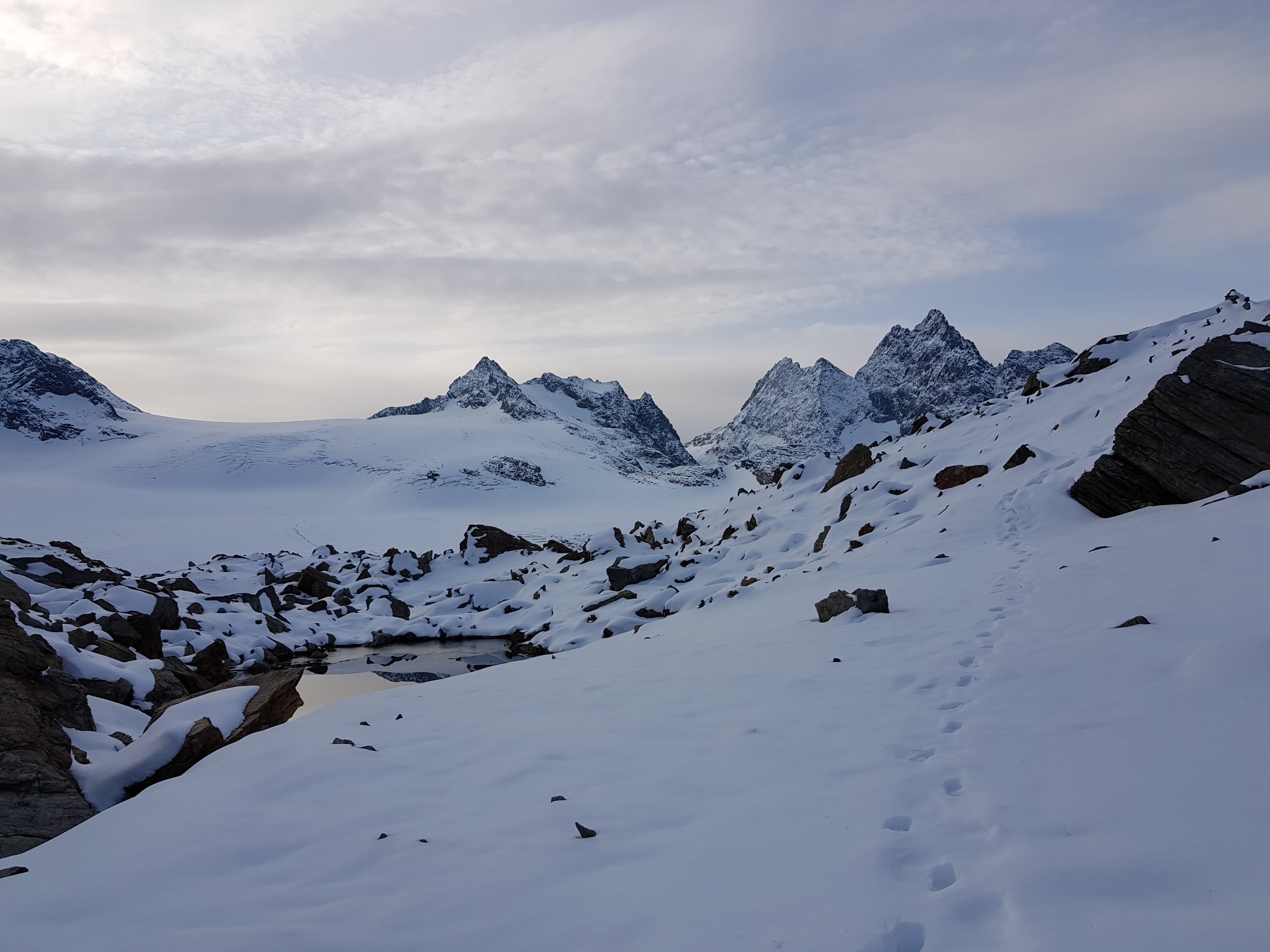
Solitary footprints in the snow at 7am somewhere above the Silvrettahütte in the Swiss Alps.
Fresh Footprints
A few years ago I found myself stood alone at a pass high in the Swiss Alps. Unusually for the time of year there was a foot or two of fresh snow on the ground, so the path, and the reassuring red and white paint marks that characterise alpine trails, were hidden. The air was still and cold, the newly risen sun watery, and there wasn’t a soul there apart from me. I looked back to see where I’d come from and was struck by how lonely my footprints looked, cutting a line of deep shadows across the otherwise unblemished snow. The absence of anyone else made the mountains immense and intimidating. I felt very alone somewhere very big, and a voice in my head asked Should I be here? Is this sensible? Should I continue?
I was in Switzerland for work, scratching the surface of the complex logistics of delivering a high-security cultural event in a small mountain town. Engaging as the work itself was, I’d been thoroughly distracted by the words ‘small mountain town’ as I’d packed. Mountains! Swiss Alps! At the time I was living in London, and I couldn’t travel to the Swiss Alps and miss the chance for a proper hello to the hills. So I arranged to stay an extra night and planned a whistlestop walk.
After a day of meetings I’d hastily changed, left my laptop in a train station locker and hiked up to the Silvrettahütte where I arrived just in time for a hearty stew and sunset. My plan the next day involved a 5.30am start, and a speedy 20km walk with roughly 1,200m of climbing and 1,900m of descent over and around the nearby mountains, paying Austria a visit for a few hours in the middle. All in time to meet the once-a-day bus and then catch a 5.30pm train to the airport. If I’d over committed myself and couldn’t complete my planned circuit in time I’d miss the bus and be stranded in a remote valley with no accommodation, and the expense of buying a fresh ticket home.
Saying Yes
What strikes me looking back is not that I was questioning myself, but more what allowed me to answer “yes”. Before setting off, I'd spent time with the map working out what was realistic in the hours available. There were decision points built into the day: if I reached a particular col by a certain time, the full circuit remained on. If I was running late, I'd turn around and retrace my steps. The plan couldn’t guarantee success, it was there to help me make good decisions.
Mountains always come with an element of uncertainty and "Can I do this? Should I do this?” remain useful questions until you're safely down. Confidence in the mountains needs to be consistently tempered by humility. The weather doesn't care how experienced you are. Nor does the terrain. The most experienced mountaineer can twist an ankle or be floored by altitude. Good mountain days often involve a continuous process of checking in. How am I feeling? How are the conditions? Am I still on schedule? Is this still sensible?
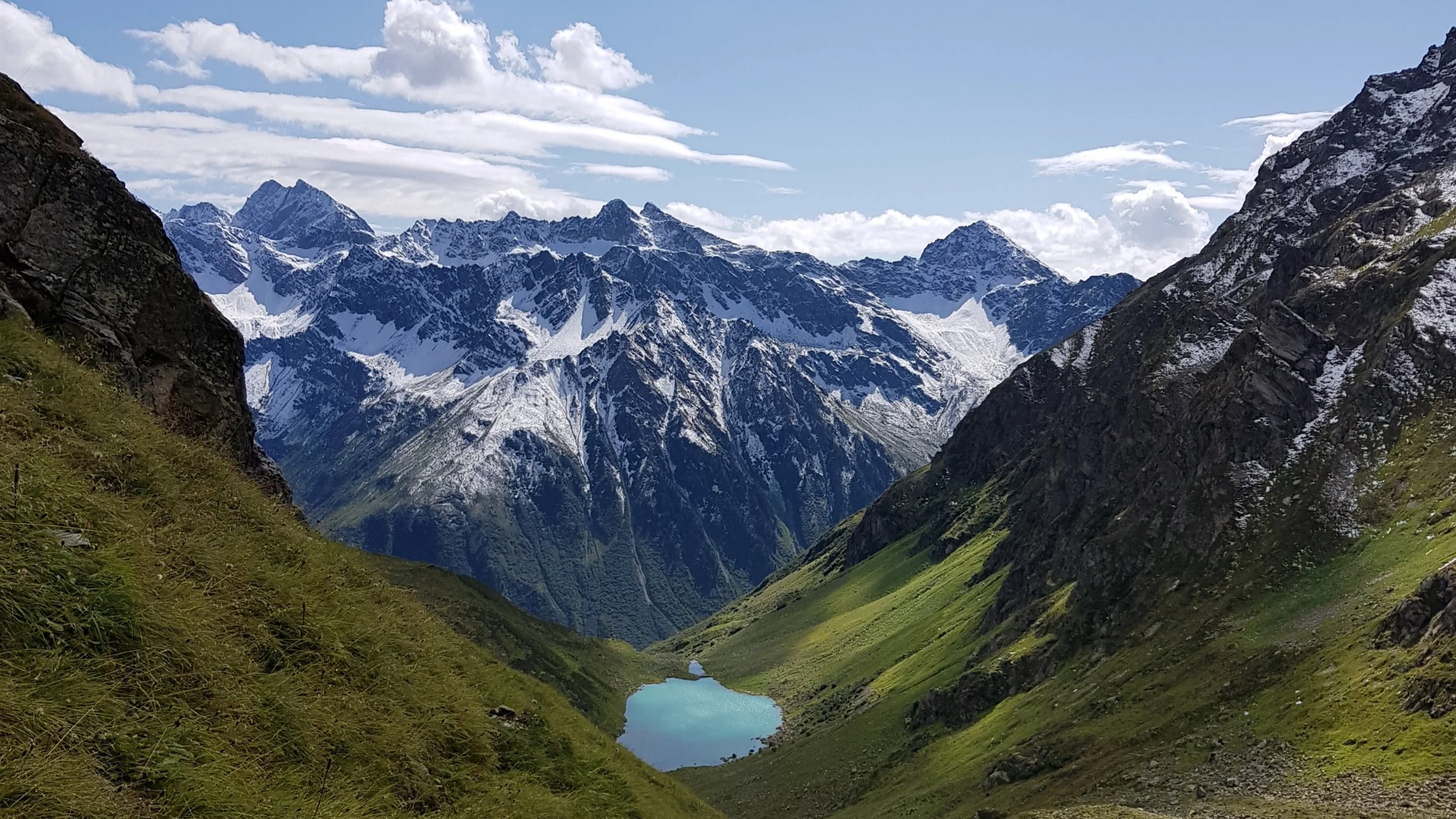
Looking down into Switzerland again and an abundance of green.
The Sound of Music
The pass I was crossing wasn’t a million miles away from the route the Von Trapp family must have taken as they escaped Austria for Switzerland in The Sound of Music. As I’d set out that morning, Maria's song I Have Confidence got lodged in my mind, in particular the line: "I have confidence in confidence alone." A great lyric – arguably a terrible philosophy for the mountains. But it's exactly how many of us think confidence should work. If I could just feel more confident, I'd know what to do. I'd stop questioning myself.
Confidence as a Process
It’s tempting to think of confidence as an absence of doubt. For me, confidence is more mercurial than that. Standing alone amidst the rock and snow, I wasn't certain. I wasn't fearless. I wasn't convinced the whole thing was entirely sensible. The risks sat somewhere between inconvenience (missing that bus) and the potentially fatal possibility of slipping and injuring myself in a cold and isolated spot, with only the creep of hypothermia for company. What I had was enough information to continue, enough trust that I had the experience to keep assessing things as they unfolded, and enough belief in my ability to find solutions should things go awry.
Most of the decisions we face in life don't carry the same consequences as a poor decision in the mountains. Choosing a new direction in our career, ending a relationship, starting a business, moving somewhere new. These choices matter, sometimes enormously, but they rarely sit at the sharp end of potential injury or death.
Curiously, we often demand a much higher standard of certainty from ourselves before making them. We tell ourselves we'll act once we're sure. Once we're confident. Once we've found the perfect route.
Yet confidence rarely arrives in that form. More often it comes from understanding what's important to us, knowing where our decision points are, and trusting ourselves to respond to whatever we encounter along the way.
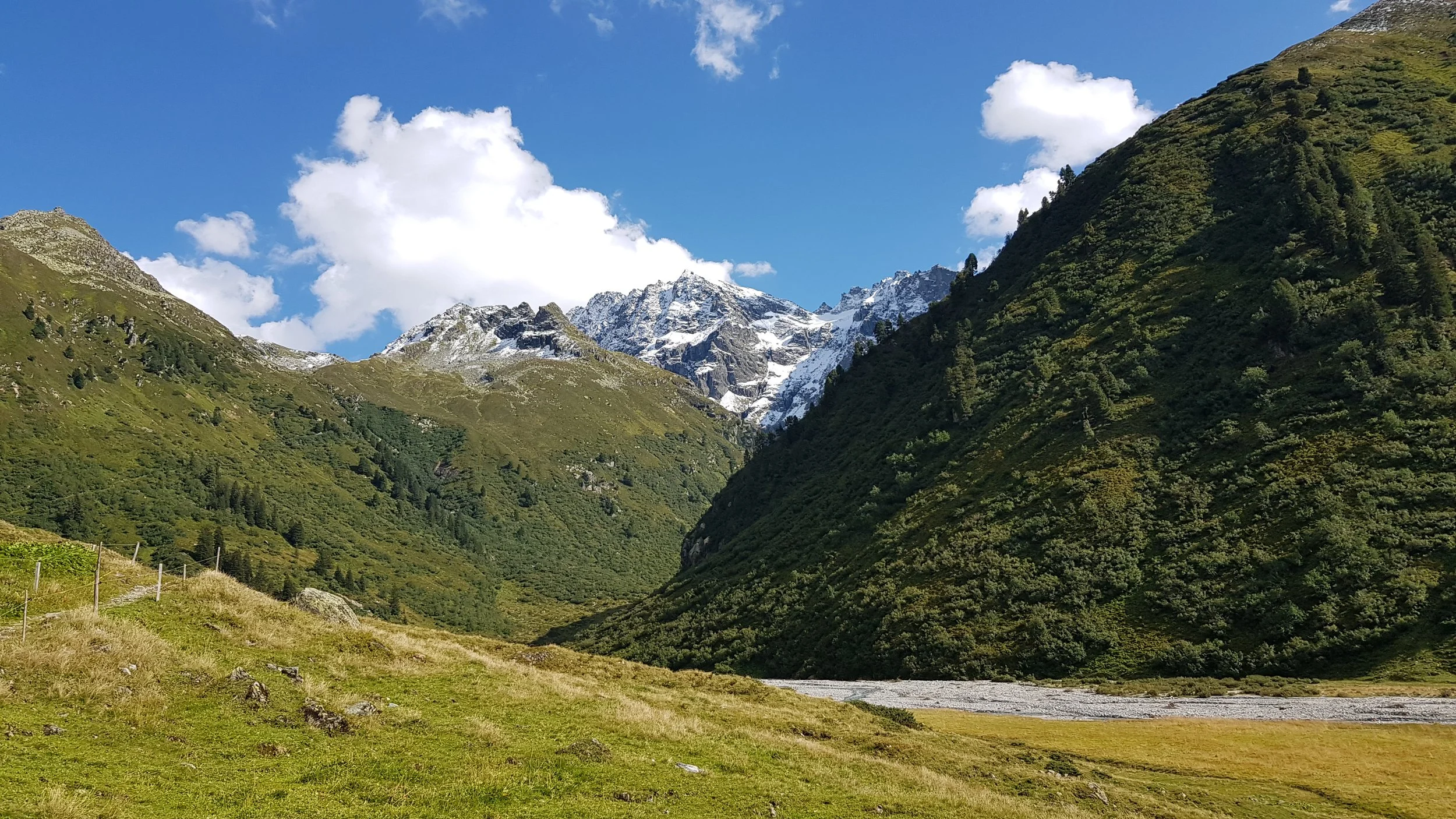
Looking back from the valley as I waited for the bus.
This is something coaching can be particularly helpful with. Not by providing certainty, but by helping us break a daunting journey into achievable stages. By reminding us of the experience, strengths and resources we already have available to us. When faced with uncertainty, it's easy to focus on everything we don't know. Coaching can help us pay equal attention to what we've already learned, the challenges we've already overcome, and the evidence that we are capable of finding our way forward. You make a plan. You gather information. You prepare as well as you can. At some point, if the destination is important to you, you have to start walking despite not knowing exactly how the journey will unfold.
I made it around my planned walk that day with time to spare before the bus arrived. I spent a happy hour basking in the sunshine of a green meadow, listening to the sound of bells on the cows drinking from the nearby river and feeling immensely proud of myself. I’d been right to question myself, right to query the safety and sense of my situation. The mountains arguably give us terrible feedback on our choices – something that’s always worth reflecting on – but at this moment and still today, I felt my choice to continue had been justified by the joy the journey had gifted me.